You've probably heard the phrase, "Your website is your best saleperson." (If you haven't, you should go read this article from 2008. It's even truer 6 years later and that article could use some updating. But, it should get the point across if you're that far behind.)
Why Your Website is Your Dumbest Salesperson.
Most of you didn't need to go read that article. You know that your website is like a salesperson and that you should invest in it. You know that buyers complete most of their buying process before they ever speak to your flesh-and-blood-type salespeople. Buyers do google searches, read blogs, ask questions on social media and hopefully (for you) they visit your website and read a lot about how you help people like them with interests, goals and challenges like theirs. You're already blogging once per day. You've comprehensively explained your service offerings on your site. You publish lots of case studies. You make sure everything is optimized for search and share-able on social media. In short, you're getting lots of prospective clients to your website; your website talks to way more people than your average salesperson does every day. If you're investing appropriately in these activities, your website is probably talking to more prospects than your whole sales team does every day.
Your website might even be doing more than just attracting your prospects to you. It might be capturing information about individual prospects as they visit and revisit your site. (Kinda like a salesperson, right?) On your website, you might have lots of reasons for visitors to share their contact information with you in exchange for more information that will help them learn and make decisions - because you've built lots of offers and landing pages and are getting a high percentage of your website visitors to convert on your site every day. If you're doing all of this stuff, your website is by far the best 'business development representative' (BDR) you have. The average BDR makes 50 attempts per day and connects with 8 people. Your website puts the average business development rep to shame. Once again - if you're doing it all correctly and thoroughly - your website should be converting more people to qualified leads than your whole business development team does.
Unfortunately, though, there are very few of you that are investing in your website's ability to sell effectively. Most salespeople are able to adapt to the prospect's situation and needs. They adapt the conversation if they're talking to a CEO vs a VP because the CEO will care more about the whole company and probably care a bit less about the details. Good sales rep adapt their conversation if they're talking to a VP marketing vs a VP sales since they have different goals and challenges inside their organization. Good sales reps adapt their questions and stories if they're talking to someone in one industry vs another. For example, you're not going to ask a higher-ed admissions person how their lead flow is - you're going to ask them how many applicants they've been getting. This is not easy to teach a salesperson. Your sales management team probably has to help your salespeople learn how to do this effectively. If your company is really on the ball, you've created different scripts, templates and training programs to teach your salespeople how to adapt to different types of buyers. But, chances are you haven't invested in your best salesperson! That's your website (just in case you forgot who I was talking about). Your website is probably your dumbest salesperson. Your website has the same damn conversation with everyone no matter who they are. In fact, while a good salesperson is having a handful of great 2 way conversations with different prospects every day, your website isn't having any. You wouldn't teach your sales reps to say the same thing no matter who they're talking to - why the hell do you set your website up to do it?
It doesn't have to be this way. You don't have to fire your website. Invest in your website like you invest in your salespeople. You can avoid your website going on a performance plan. You just need to train it. Let me show you a few examples of websites who are really smart, effective, quota crushing salespeople for their companies...
Examples of Companies with Websites Who are Their Smartest Salespeople.
As you might expect, one of the smartest sales development companies in the world has a smart salesperson set up as their website. Sales Benchmark Index has implemented personalization on their website very effectively. They target larger B2B companies to help them improve sales and marketing effectiveness. As they target larger enterprises, multiple influencers and decision makers are often involved. In their marketing, they target CEOs, sales leaders, marketing leaders, sales operations, HR and salespeople themselves. As you can see in the screen grab below, they enable these different personas to personalize their website experience.
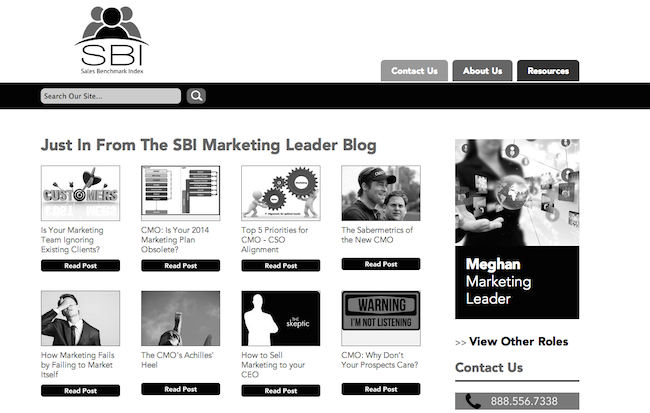
Once a visitor chooses a role, Sales Benchmark Index presents content that would be applicable to a person in that role. The screen grab below is displayed after a visitor clicks "marketing leader". As you can see, it also recognizes Meghan is the actual visitor and addresses her by name. (Meghan is the person who took these screen shots.)
Training Your Website to Have Personalized Conversations Like Salespeople Do
While it's pretty hard to train a whole sales team on being great at adapting to different buyers, websites are pretty easy to train. You just have to write the content and write the rules. Here are a few simple steps.
1. Create buyer personas. If you sell to multiple industries, multiple people within a company or people with different situations, create as many buyer personas as you think you can and should target. At HubSpot, we have a bunch: small business owners, in-house marketers at SMEs, marketers at enterprise companies, marketing agencies, ecommerce companies, media/publishing executives, higher educational enrollment executives, non profit directors. Here's a free guide for creating buyer personas.
2. Think about what content you need to create for different buyer personas. You should probably start with one buyer persona first. Think about what content you'd need for different stages of their buying process. When they're in the awareness stage, you need to create blog posts like this one that point out that they're missing out on opportunity to do better. When they're in the interest phase, you need to create case studies. When they're in the decision-making phase, you need to create forms that offer a free consultation targeted at their needs. When they're in the action phase, you need to create pricing pages and pages describing your products and services. Here's a free guide that explains exactly how to do this.
3. Now that you have a matrix of personas and buying or "lifecycle" stages, start customizing your highly trafficked pages with content that speaks to these different personas at their different stages. For example, the text on your home page and blog sidebars should change. The calls to action on your product and services pages should change. You should highlight links to different content and have different forms asking different questions. Here's a guide (with videos) on how to implement smart content.
Will Websites Make Salespeople Unnecessary Someday?
Probably. Sadly (for the sales profession), we'll all probably buy complex products from some sorta robot (or algorithm) some day. I'd wager that the robots will be better than 99% of salespeople ever were.
PS. My website is still dumb. I'm obviously not trying to sell you anything here. Feel free to go buy this, though. :-)
PPS. You can totally make your website smarter if you want. In the famous words of Lloyd from Dumb and Dumber. "Just when I thought you couldn't get any dumber, you go and do something like this... and totally redeem yourself [by creating a smarter website]!" And you thought the website design business was dead. We're just getting started.


 Take an awesome product like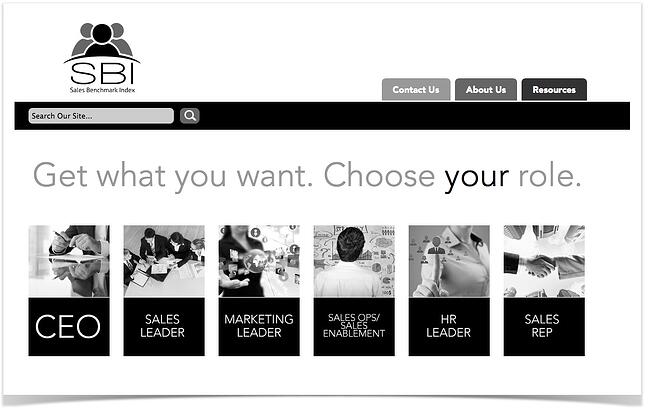
 You asked me if I have any advice to share on quickly ramping up your new agency. I am happy to share some assorted nuggets of advice that have added to the success of my